
One quality program. Every pharmacy.
We connect independent compounding pharmacies, providers, and patients through a shared commitment to quality. No matter your role in the healthcare ecosystem, our system is built to give you complete confidence.
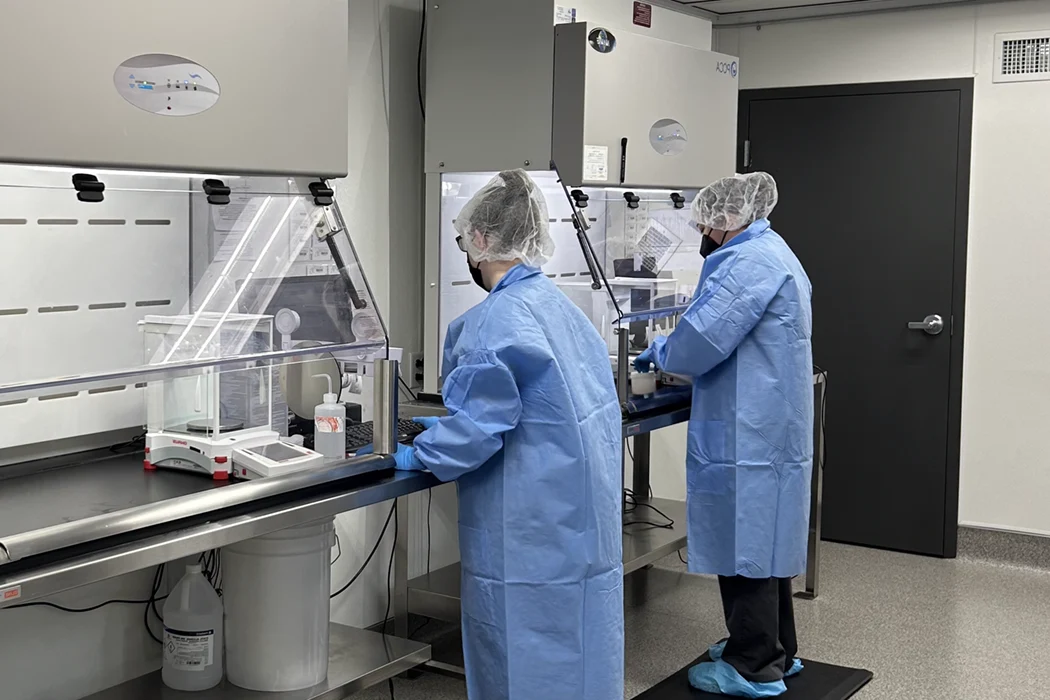
Trusted Standards and Systems Across the Revelation Network

The Network Standard
Quality excellence depends on a framework of systems that is clearly defined, understood, applied, measured, and sustained. It is not the responsibility of one department; it is a commitment shared across our entire network: from the compounding technician who prepares each medication, to the laboratory personnel who test it, to the Quality Team that confirms it meets our standards, to the pharmacist who performs the final review.
USP ‹797› Sterile Compounding
Requires: Sterile compounding quality standards including environmental monitoring, BUD, and personnel competency.
Revelation commitment: Full chapter compliance combined with extended BUD verification through our validated corporate stability testing programs.
USP ‹795› Non-Sterile Compounding
Requires: Non-sterile compounding standards governing formulation integrity, labeling protocols, and baseline quality checks.
Revelation commitment: Network-wide SOP alignment and mandatory quarterly internal compliance reviews across all 503A sites.
USP ‹800› Hazardous Drug Handling
Requires: Hazardous drug handling, personal protective equipment (PPE), containment engineering, and disposal.
Revelation commitment: Dedicated training paths, specialized negative-pressure containment environments, and strict NIOSH-aligned management guidelines.
DQSA / 503A / 503B
Requires: Drug Quality and Security Act provisions separating patient-specific compounding (503A) from outsourcing facilities (503B), which must adhere to current Good Manufacturing Practices (cGMP).
Revelation commitment: Network 503A pharmacies operate under state board oversight and USP standards. Applicable 503B outsourcing facilities are FDA-registered and operate under cGMP requirements integrated into our corporate QMS.
What Goes Into Every Preparation
Quality starts before anyone compounds anything, and it doesn't stop until a pharmacist signs off on the finished preparation.
Verified Sourcing
All ingredients are sourced exclusively from FDA-registered manufacturers.
Identity Testing
Material quality is verified through secondary analytical testing performed on every raw material lot.
COA Cross-Verification
Certificates of Analysis are checked for purity, residual solvents, microbial, and endotoxin limits before entering rotation.
Quarantine Holds
Full sterility (USP ‹71›) and bacterial endotoxin (USP ‹85›) laboratory testing is performed on every sterile batch.
Potency Testing
Component strengths are confirmed through validated analytical testing methods.
Stability Profiles
Beyond-use dating (BUD) is backed by scientifically sound, validated stability data profiles.
The Program Behind Every Pharmacy
A single pharmacy can have great quality practices. Scaling those practices across a national network requires a system. That's what Revelation provides.
Harmonized SOPs
Standardized operating procedures are completely aligned across every network pharmacy location.
Validated Formulas
Compounding formulations and quality control protocols are strictly validated to eliminate variability.
Continuous Improvement (CQI)
Our corporate performance program actively tracks and trends performance data across 9 core management areas.
Active CAPA Execution
Every deviation, out-of-specification (OOS) result, or adverse event triggers a formal investigation with root-cause analysis.
Structured Training
Compounding personnel complete structured training paths, hands-on evaluations, and ongoing competency assessments.
Material Control & Supplier Management
Revelation's Supplier Management System ensures that every drug substance, component, and inactive ingredient used in our network meets rigorous quality requirements before it ever enters a pharmacy. Our Quality Team maintains active, documented oversight of the entire supply chain.
FDA-Registered Sources
All ingredient manufacturers must hold active FDA registration and maintain a current Drug Master File on record.
Rigorous Qualification
Every supplier undergoes a corporate qualification review covering Certificates of Analysis, regulatory filings, third-party testing data, and compliance history.
Supply Chain Continuity
Multiple qualified suppliers are maintained for each drug material to ensure continuous, uninterrupted patient care.
Serialized Traceability
Every ingredient is tracked through a serialized supply chain system that meets federal drug supply chain verification requirements.
The Journey of a Prescription
Every compounded medication produced in a Revelation network pharmacy moves through a structured, documented, and auditable quality workflow.
Ingredients & Qualification
Formulation & Protocols
Compounding & In-Process Controls
Testing & Quarantine Hold
Quality Team Release & Dispensing
Meet the Quality Team
The leaders responsible for building, maintaining, and continuously improving the quality program across the Revelation network.

Nancy Fingerhut

Rebecca Johnson

Megan Settle

Amanda Martin

MacKenzie Fegan
Questions About Compounding Quality
What is a compounded medication?
A compounded medication is a customized preparation made by a licensed pharmacist to meet a specific patient need. Compounding is regulated at both the state and federal level, and pharmacies must meet strict standards for facilities, training, and quality control.
Are compounded medications FDA-approved?
Compounded medications are not FDA-approved as individual products because they are uniquely tailored for an individual patient. However, they are prepared in compliant facilities that strictly follow FDA, state board, and USP requirements, using active ingredients sourced exclusively from FDA-registered suppliers.
How does Revelation ensure compounded medications are sterile?
Sterile preparations are compounded under strict USP ‹797› guidelines within classified cleanrooms with continuous environmental monitoring. Each sterile batch is held in quarantine for approximately 14 days to undergo full laboratory testing for sterility (USP ‹71›) and bacterial endotoxins (USP ‹85›) before it can be released.
What happens if a quality deviation or product complaint occurs?
Every single deviation, out-of-specification (OOS) result, or adverse event immediately triggers a formal corporate investigation. We run a comprehensive root-cause analysis and execute a Corrective and Preventive Action (CAPA) protocol. No batch is released from quarantine until our Quality Team verifies that it meets every network standard.
How do I know a compounded medication meets quality standards?
Look for pharmacies that follow USP (United States Pharmacopeia) standards, verify their ingredient sources, perform testing on finished preparations, and can provide documentation of their quality processes. In the Revelation network, every pharmacy follows the same standardized quality program, so the process is consistent regardless of which pharmacy fills the prescription.
What USP standards apply to compounding?
USP General Chapters ‹795›, ‹797›, and ‹800› set the standards for non-sterile compounding, sterile compounding, and hazardous drug handling, respectively. These chapters define requirements for facilities, equipment, personnel training, process controls, and testing. All Revelation network pharmacies operate in accordance with these standards.
What does "Powered by Revelation" mean?
“Powered by Revelation” means the pharmacy is part of the Revelation network and receives the full scope of support that comes with it, including operational infrastructure, clinical education, regulatory guidance, and quality oversight. On the quality side specifically, it means the pharmacy operates under Revelation’s standardized quality program, including qualified ingredient sourcing, validated testing methods, standardized procedures, and ongoing quality monitoring.
How are ingredients verified?
In the Revelation network, raw materials are sourced from FDA-registered manufacturers. Each lot undergoes identity testing to confirm the material matches what is stated on the Certificate of Analysis. Purity, residual solvent, microbial, and endotoxin limits are reviewed before any ingredient is approved for use in compounding.